



Electric Fence Cost per Hectare (and per Acre): How to Budget
Electricercas team · October 8, 2026 · 5 min read
Key takeaways
- You pay for perimeter, not area
- More acres means less fence per acre
- Strand count multiplies the cost
- Energizer and grounding are fixed costs
- Use the calculator for current prices
"How much does it cost to fence one hectare?" is one of the questions we get most on WhatsApp, and the honest answer is: it depends on how many feet of fence you actually need, how many wires you'll run, and which energizer you choose. Area is only the starting point; what you pay for is linear wire, posts, insulators, and a unit that powers it all. This guide breaks down electric fence cost per hectare (and per acre), shows which items weigh most, explains why fencing 10 hectares doesn't cost ten times as much as fencing one, and walks you through a realistic budget.
You don't fence area, you fence perimeter
One hectare is 10,000 m², about 2.47 acres. As a perfect 100 × 100 m square (roughly 328 × 328 ft), its perimeter is 400 m, or about 1,312 ft. Make that same hectare a long 50 × 200 m strip and the perimeter jumps to 500 m. More importantly, as area grows, perimeter per hectare drops.
| Area (square shape) | Approx. side | Approx. perimeter | Fence per hectare |
|---|---|---|---|
| 1 ha (2.5 acres) | 100 m (328 ft) | 400 m (1,312 ft) | 400 m |
| 4 ha (9.9 acres) | 200 m (656 ft) | 800 m (2,625 ft) | 200 m |
| 10 ha (24.7 acres) | 316 m (1,037 ft) | 1,265 m (4,150 ft) | 126 m |
| 25 ha (61.8 acres) | 500 m (1,640 ft) | 2,000 m (6,562 ft) | 80 m |
| 100 ha (247 acres) | 1,000 m (3,281 ft) | 4,000 m (13,123 ft) | 40 m |
That's why the per-hectare cost falls on bigger properties: the same energizer and grounding system are spread across more land, and each hectare needs less edge. Keep in mind that internal paddock divisions must be added to the total footage.
What goes into the cost
An electric fence has five cost groups. Knowing them helps you decide where to invest and where to save without compromising performance:
- Conductor: galvanized steel wire, aluminum wire, polywire, or polytape, multiplied by the number of strands. See our fence and barbed wire options.
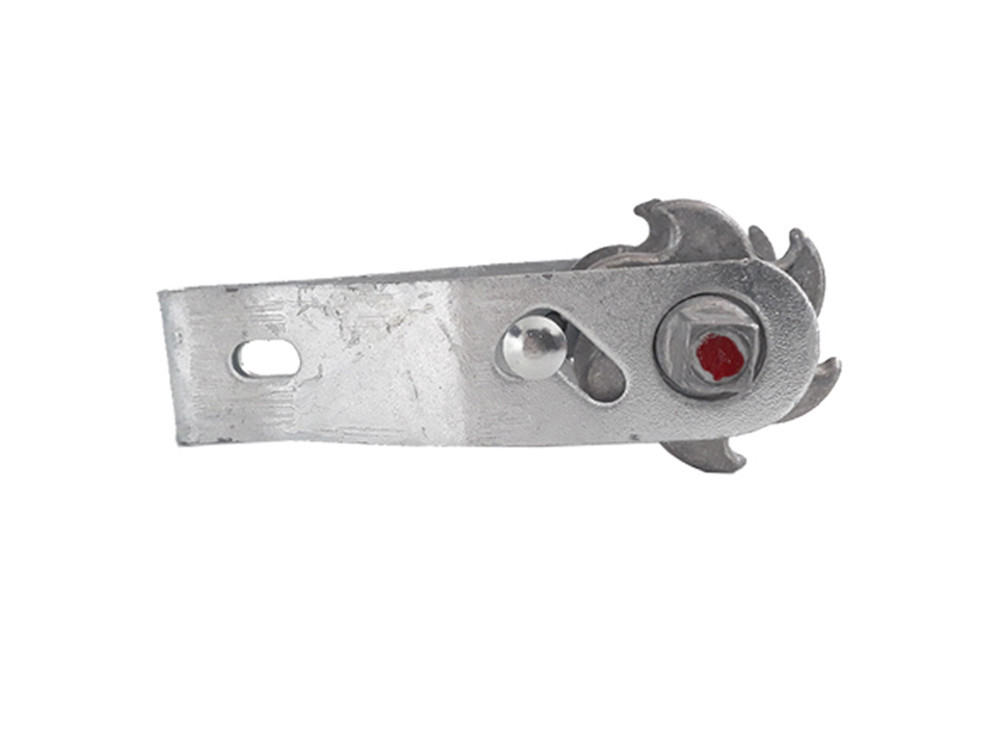
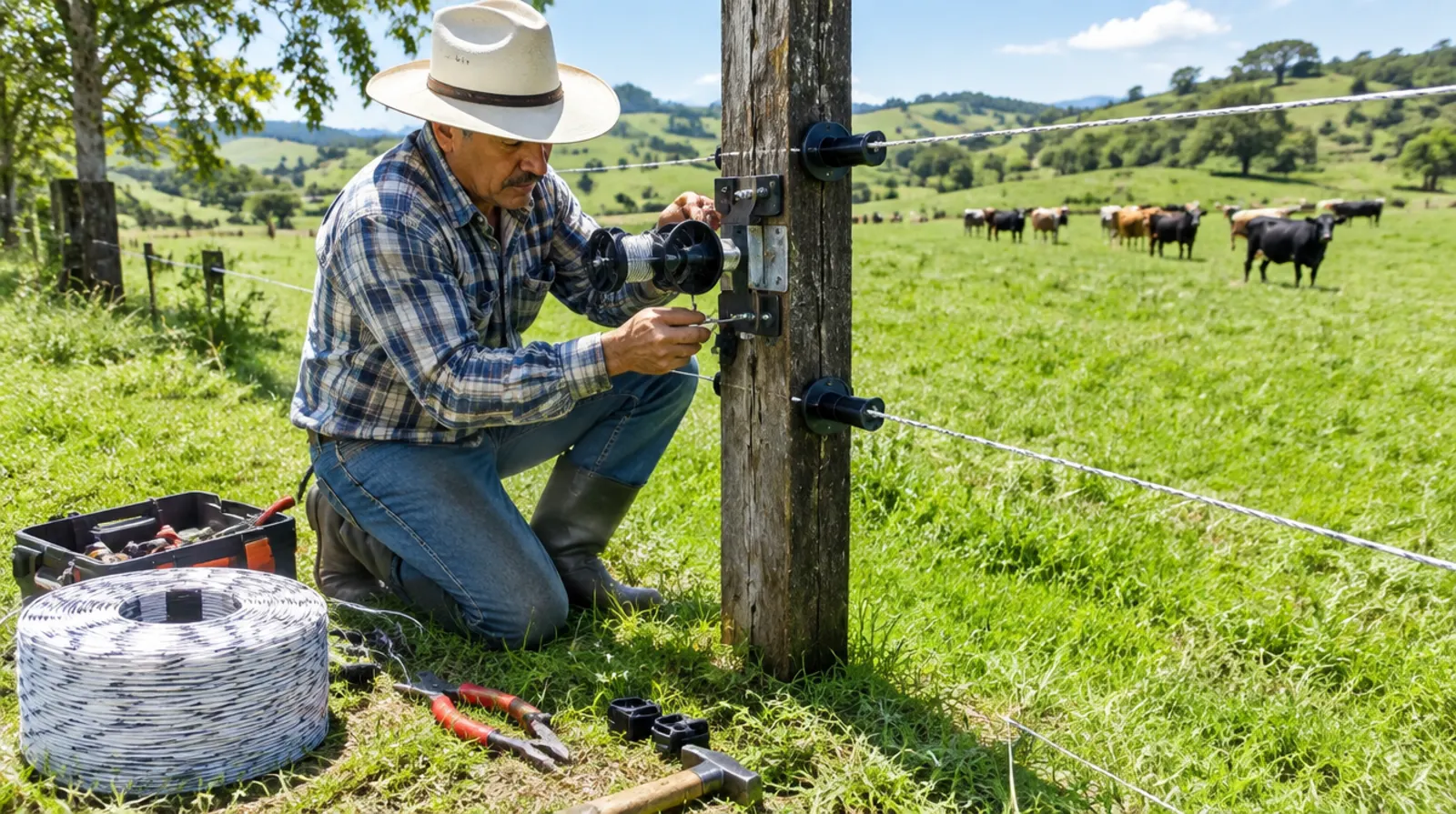
- Posts and rods: brace posts at corners and gates, plus line posts. Often the most variable item, depending on whether you use farm timber, fiberglass, or plastic.
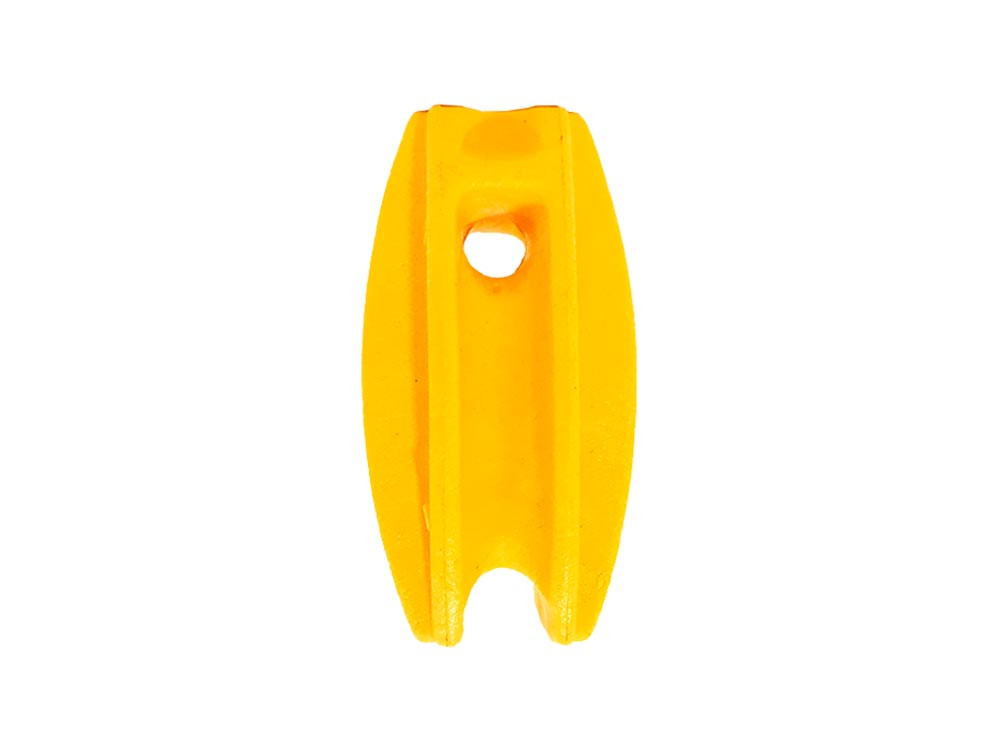
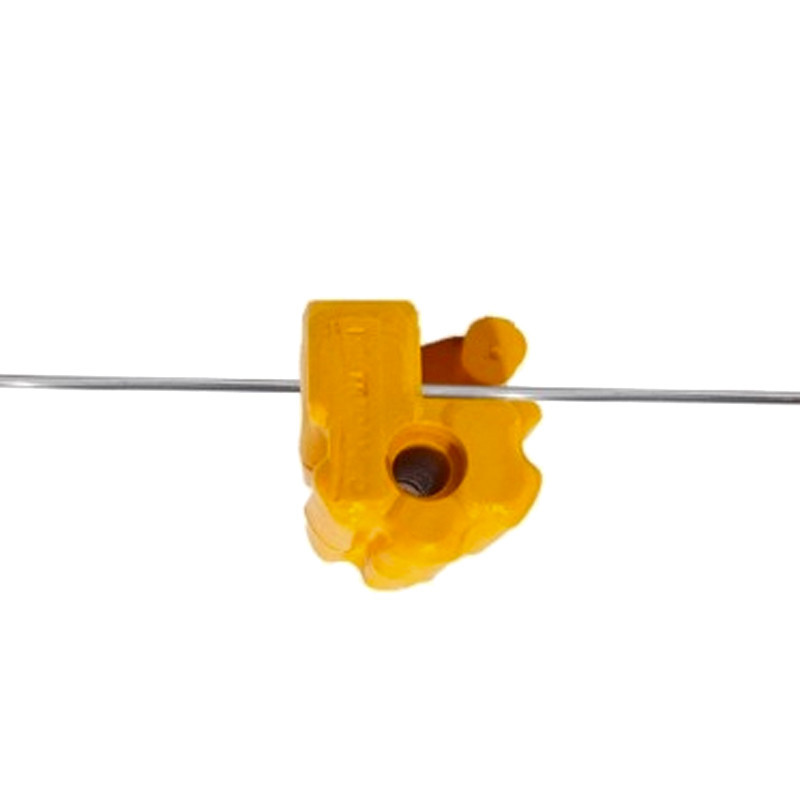
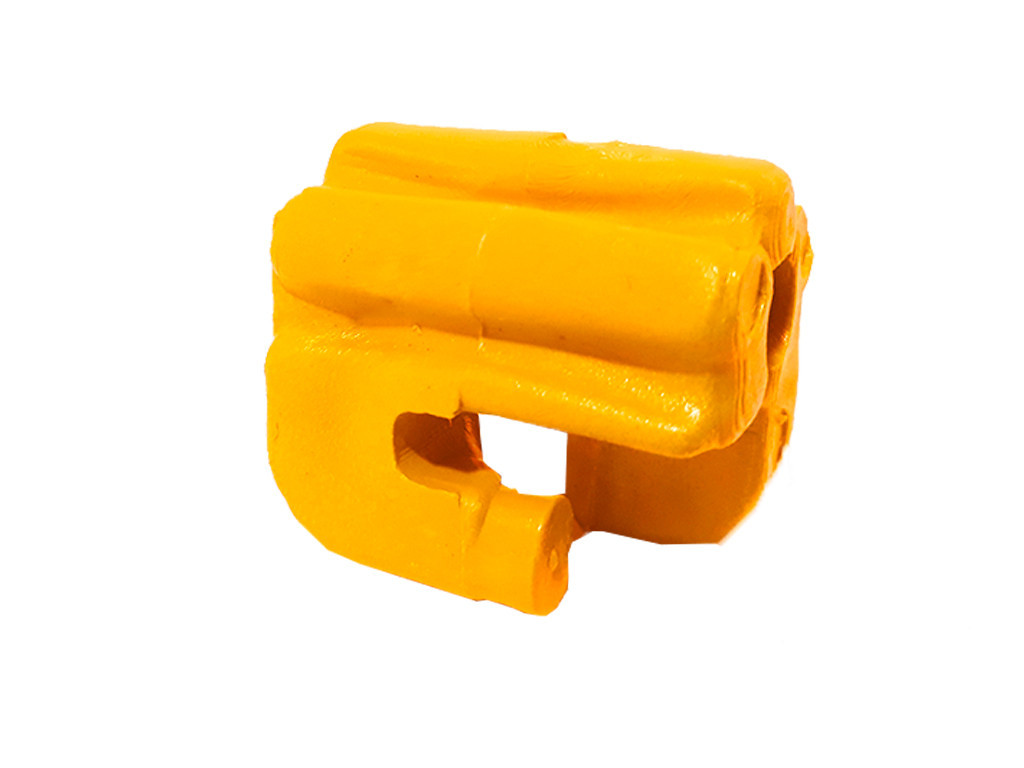
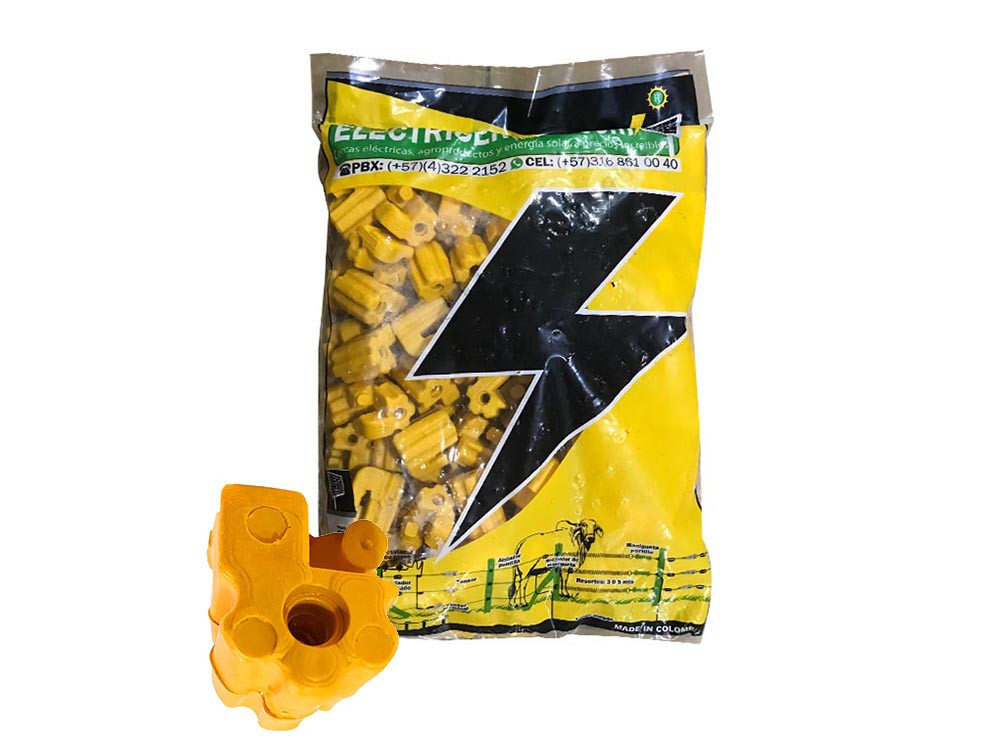
- Insulators: corner, line, and strain insulators. Cheap per unit, but you buy them by the hundred. Browse electric fence insulators.
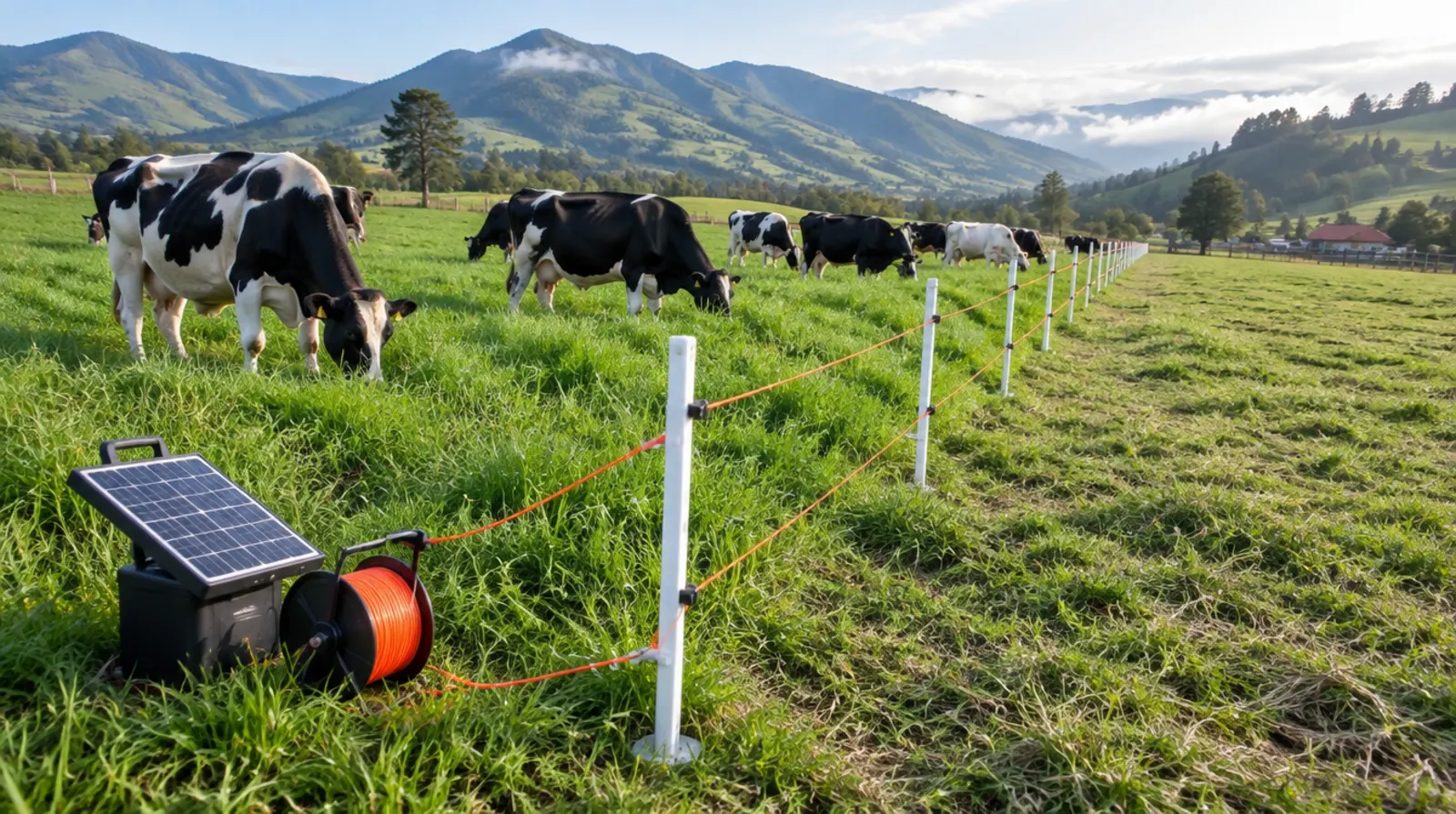
- Energizer (charger): the heart of the system. Price depends on output (joules) and power source: 110 V mains, battery, or solar. Check our energizers.
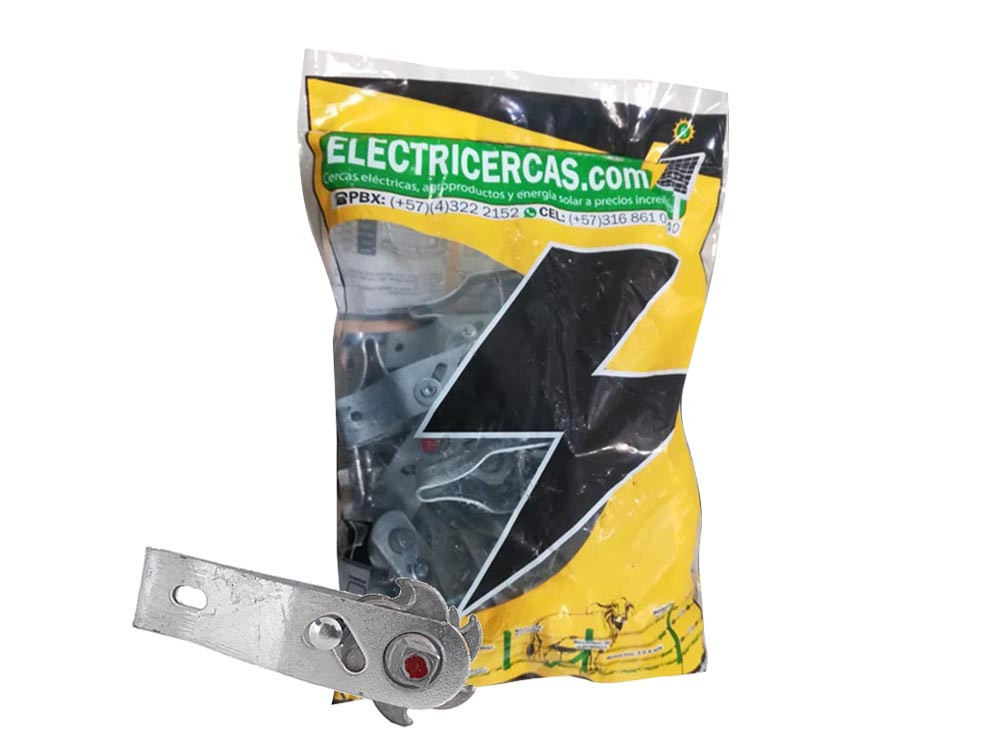
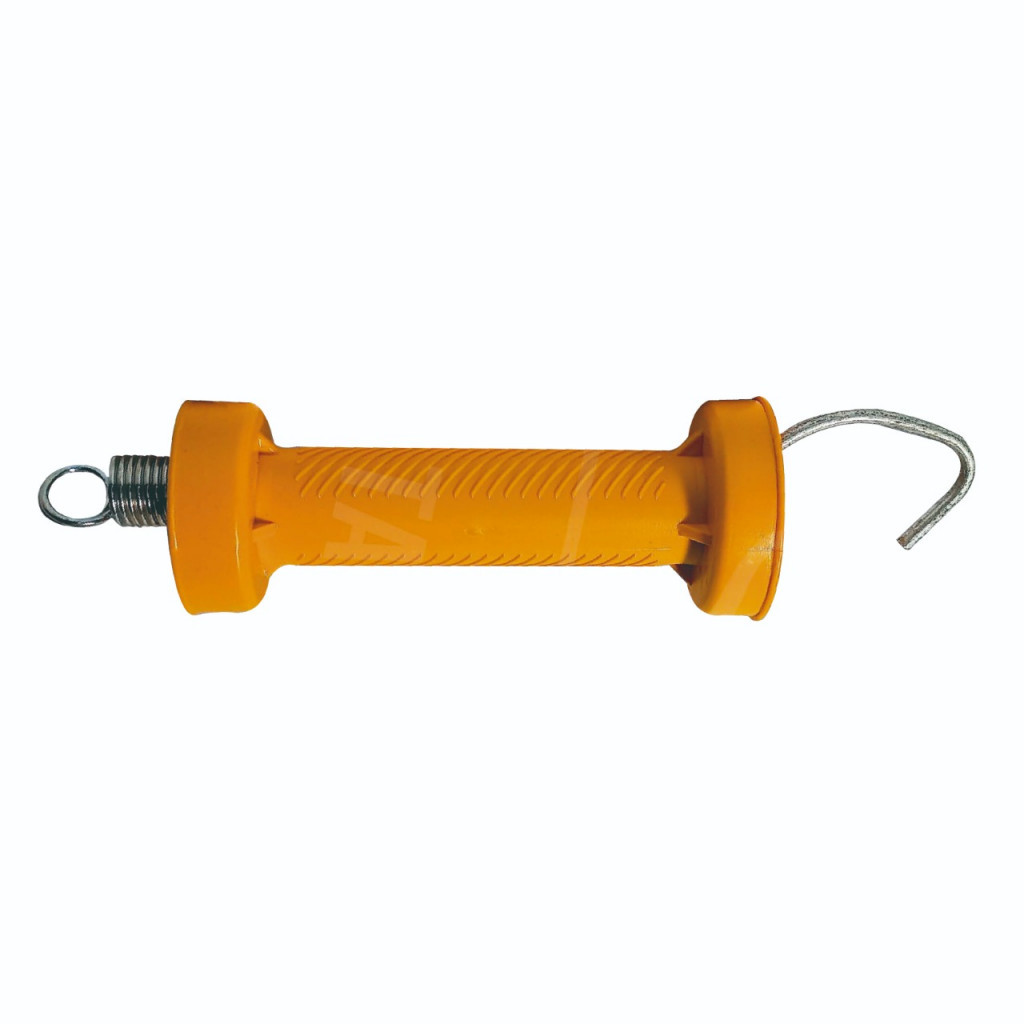
- Grounding and accessories: ground rods, lead-out cable, strainers, gate handles, lightning diverters, and warning signs. Find them under electric fence accessories.
Which item weighs the most?
On small fences (one or two hectares), the energizer and grounding are a large share of the total because they're fixed costs: you pay them whether you fence 1,300 ft or 6,500 ft. On mid-size and large farms, the weight shifts to wire and posts, which grow with every foot. On large properties, decisions about strand count and post spacing move the budget the most.
How many strands for each species
Strand count directly multiplies the cost of conductor and insulators. These are common field setups:
| Livestock | Recommended strands | Typical heights above ground |
|---|---|---|
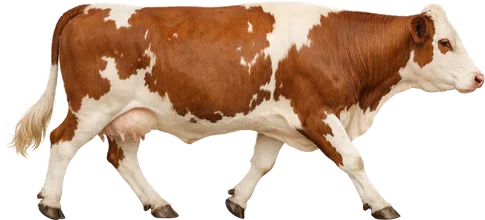
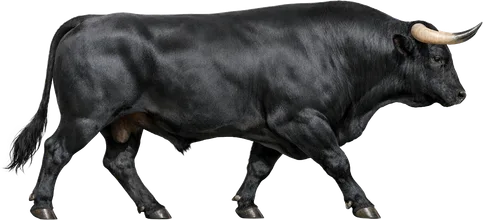
| Adult cattle | 1 to 2 | 31 to 39 in (80 to 100 cm) |
| Cows with calves | 2 to 3 | 20, 31, and 39 in |
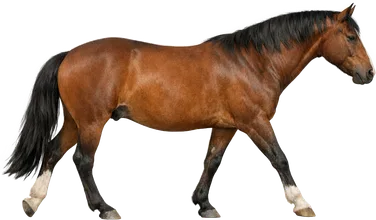
| Horses | 2 to 3 | 28 to 55 in (70 to 140 cm) |
| Sheep and goats | 3 to 5 | from 6 up to 35 in |
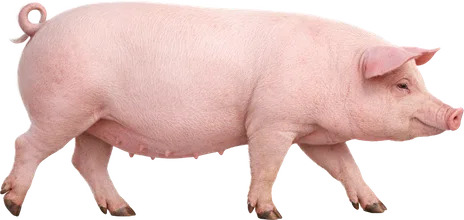
| Pigs | 2 | 8 and 16 in |
A one-hectare paddock for adult cows with a single strand needs about 400 m (1,312 ft) of wire. For sheep with four strands, that becomes about 1,600 m (5,250 ft). Same hectare, four times the conductor.
How to build your budget step by step
- Measure the real perimeter with GPS, a mapping app, or a tape. Don't rely on acreage alone.
- Add internal divisions if you plan rotational grazing.
- Multiply by the number of strands to get total conductor length.
- Count brace posts: corners, gates, and strain points every 650 to 1,300 ft.
- Work out line posts: perimeter divided by spacing (for example, 50 ft on flat ground).
- Count insulators: one per strand per post that needs it, plus corners.
- Choose the energizer based on total electrified wire length, livestock, and available power.
- Add grounding: at least three ground rods spaced apart is a common practice.
- Add accessories and a 5 to 10% contingency.
Our fence calculator does this math for you from the acreage and builds a material list with current store prices. That beats outdated figures found online, since wire and steel prices change often.
Factors that raise or lower the cost
What drives it up
- Hilly or broken terrain: more posts and strainers.
- Long or irregular lots: more perimeter per hectare.
- Hard-to-contain animals (sheep, goats, pigs): more strands.
- No grid power: a solar energizer with panel and battery.
- Dry or sandy soil: the ground system needs more rods.
What brings it down
- Reusing existing brace posts that are still sound.
- Using fiberglass or plastic line posts that need no insulators.
- Sizing the energizer correctly, neither oversized nor at its limit.
- Installing it yourself with our installation manuals.
- Electrifying an existing barbed wire fence with an offset hot wire.
Electric vs. conventional fence: the real cost
Beyond the upfront price, an electric fence uses fewer strands and wider post spacing than a four- or five-strand barbed wire fence, and it injures animals and hides far less. For the full comparison of cost, animal welfare, and lifespan, read electric fence vs. barbed wire. To choose the right power source, see 110 V, battery, or solar energizer.
A worked example (no made-up prices)
Picture a square 4-hectare (about 10-acre) dairy paddock on flat ground with two strands:
- Perimeter: about 800 m (2,625 ft).
- Conductor: 800 m × 2 strands = 1,600 m (about 5,250 ft) of wire.
- Brace posts: 4 corners + 1 gate + bracing = roughly 6 to 8.
- Line posts at 15 m (50 ft): about 53, plus spares.
- Insulators: two per post if wood or metal; none on fiberglass or plastic with clips.
- Energizer: a small or mid-size unit, depending on 110 V availability.
- Grounding: 3 ground rods and cable.
With that list, get current pricing from the calculator or on WhatsApp. That's how ranchers avoid surprises.
Get your exact quote
Electricercas has been putting together material lists for farms of every size since 2014, with more than 11,000 orders delivered. We ship throughout Colombia and to other countries. Run your numbers in the calculator, browse our electric fence category, or contact us on WhatsApp at +57 305 453 5264 with your lot dimensions and livestock type, and we'll send you a clear quote.
Frequently asked questions
How much wire do I need to fence one hectare?
If the hectare is square, the perimeter is about 400 m (1,312 ft). Multiply by your strand count: two strands need roughly 800 m (2,625 ft) of wire, plus a small margin for ties and corners.
Why is the cost per acre lower on large properties?
Perimeter grows more slowly than area, and the energizer and grounding are fixed costs spread across more land. A 100-hectare block needs about 40 m of fence per hectare, versus 400 m for a single hectare.
What is the most expensive part of an electric fence?
On small fences, the energizer and grounding are a big share of the total. On mid-size and large farms, wire and posts become the main expense, especially with multiple strands.
Where can I get a current price?
Enter your acreage in the Electricercas calculator to get a material list with current prices, or contact us on WhatsApp at +57 305 453 5264. We ship internationally as well.
Need help with your fence?
We ship worldwide. Message us and an advisor will help you choose the right setup.