







Solar Electric Fence: Benefits and Panel and Battery Sizing
Electricercas team · October 13, 2026 · 5 min read
Key takeaways
- Electrify off-grid pastures with no power bill
- Size from mA draw, peak sun hours and autonomy
- Design for 3 to 5 days without sun
- Use a deep-cycle battery, not a car battery
- Solar won't fix a poor ground system
A solar electric fence lets you electrify pastures the power grid never reached, with no electricity bill and no weekly trips to recharge batteries. But for it to work day and night, including through cloudy weeks in the rainy season, the solar panel and battery have to be sized correctly. This guide covers when a solar electric fence makes sense, what the components are and how to calculate, step by step, the panel and battery your energizer needs.
Benefits of a solar electric fence
- Works off-grid: remote paddocks, new properties, hillsides and open range.
- Zero energy cost: the sun does the work; you only pay for equipment and upkeep.
- Fewer trips: no more hauling batteries to the shop for charging.
- Portable: ideal for rotational grazing, strip grazing and temporary fences.
- Outage-proof: if grid power goes down, the fence stays hot.
When solar is NOT the best choice
If you have grid power a few yards from the pasture and need to electrify dozens of miles through heavy weeds, a mains energizer is usually more powerful and cheaper. Compare your options in our guide on which electric fence energizer to buy.
Components of a solar fence system
| Component | Function | What to check when buying |
|---|---|---|
| Solar panel | Converts sunlight into energy to charge the battery | Wattage (W) and 12 V nominal voltage |
| Charge controller | Protects the battery from overcharge and deep discharge | Rated for the panel's current |
| Battery | Stores energy for night and cloudy days | Capacity in amp-hours (Ah) and type (deep-cycle, gel, lithium) |
| 12 V energizer | Generates the fence pulses | Current draw in milliamps (mA) and output joules |
| Mount and wiring | Holds the panel at the right angle and links everything | Weather resistance |
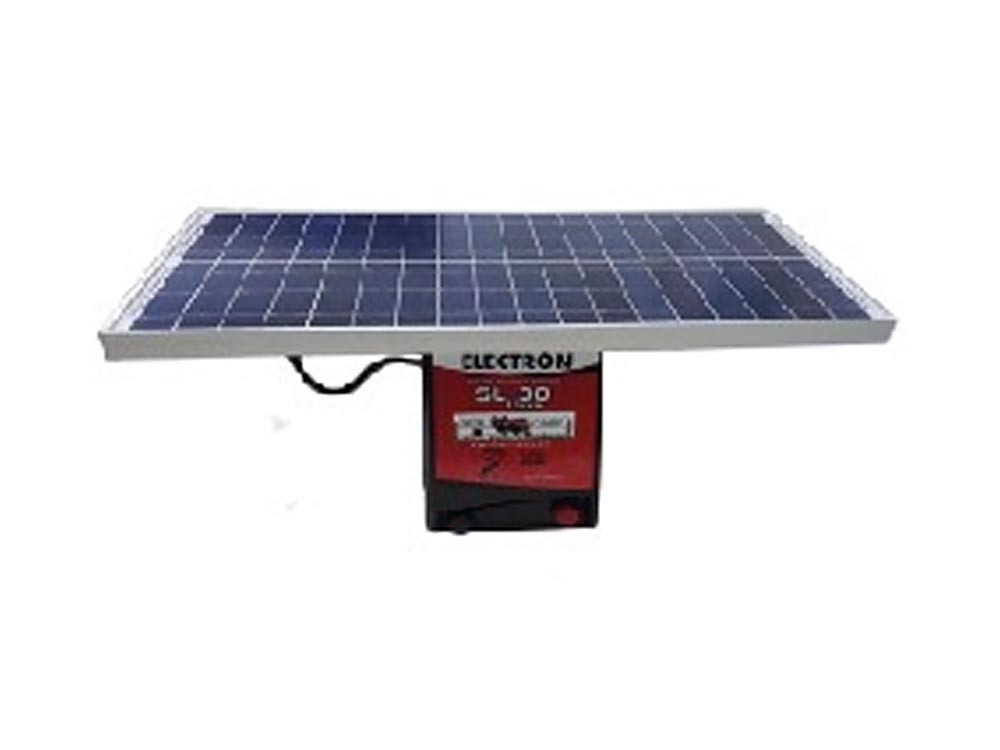
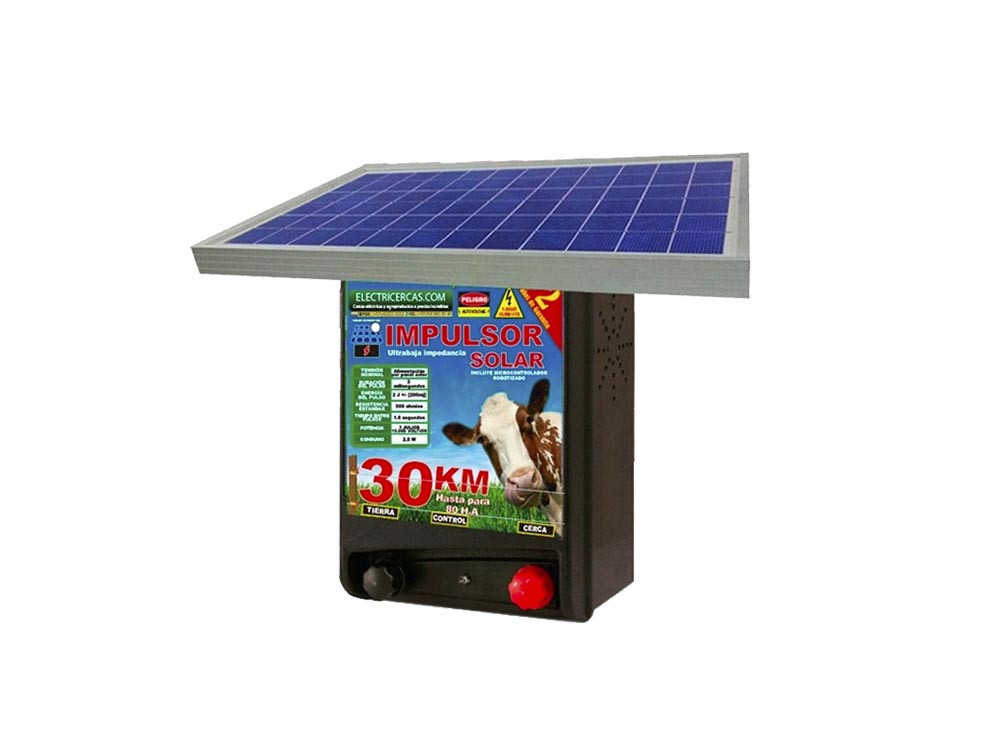
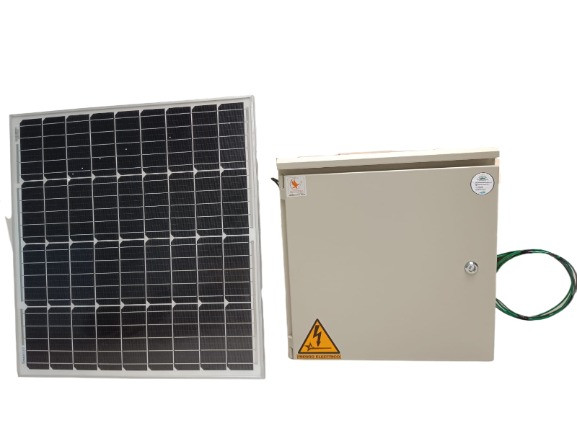
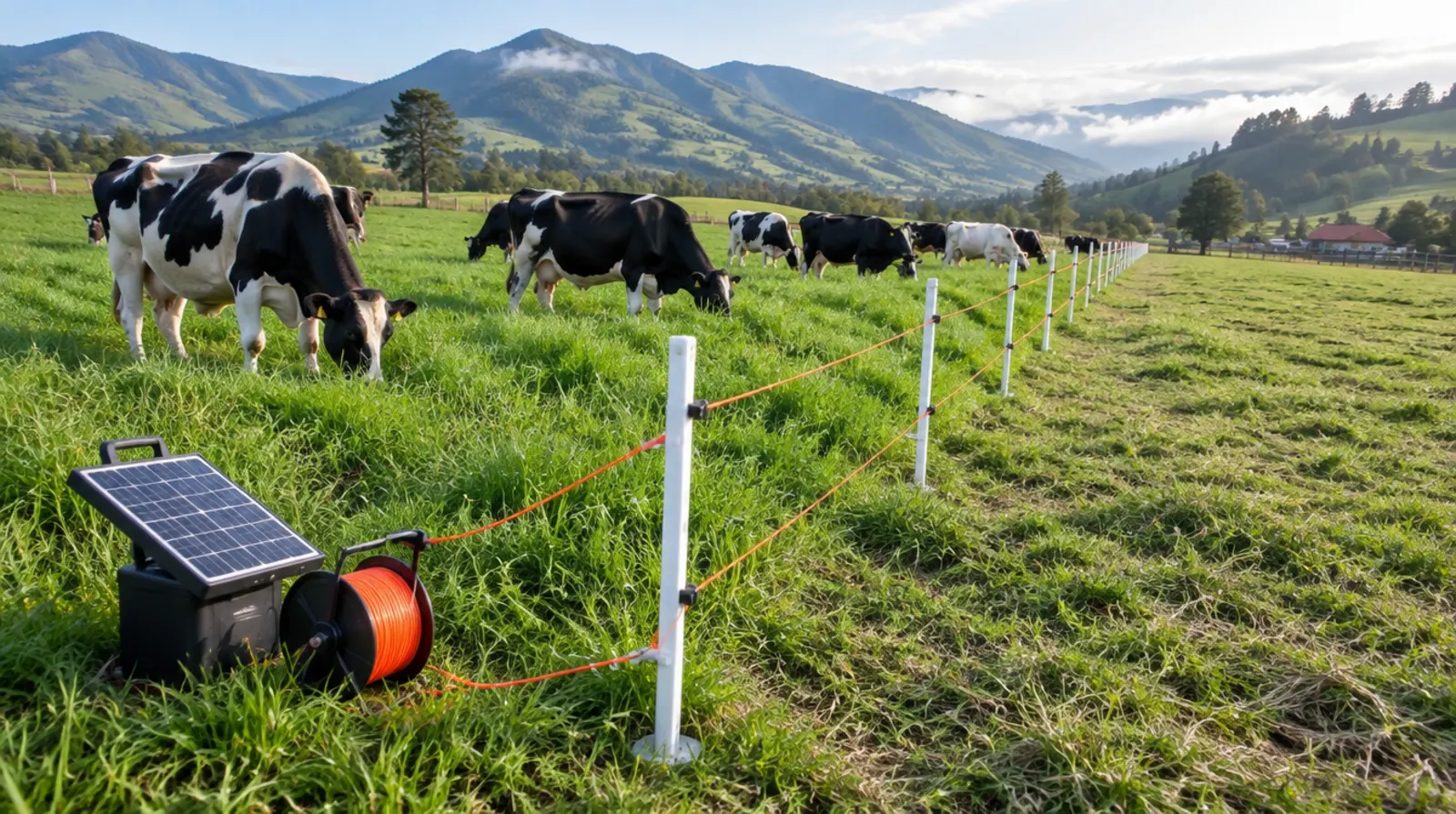
You can buy all-in-one solar fence chargers, with energizer, battery and panel in a single unit, or component systems that let you expand and swap parts. Browse solar energizers.
How to size a solar panel and battery
The math rests on three numbers: the energizer's current draw, your area's peak sun hours, and the days of autonomy you want without sun.
1. Find the energizer's current draw
The manufacturer lists consumption in milliamps (mA) at 12 V. Multiply by 24 hours for daily use:
Daily consumption (Ah) = draw (mA) × 24 ÷ 1,000
2. Choose days of autonomy
Many regions have stretches of several overcast days. A common design target is 3 to 5 days without charging; more in persistently cloudy areas or northern latitudes in winter.
3. Size the battery
Battery (Ah) = daily consumption × days of autonomy ÷ depth of discharge
For deep-cycle lead-acid batteries, a 50% depth of discharge is a common recommendation for long life. Lithium batteries tolerate deeper discharge; check the manufacturer's data sheet.
4. Size the panel
Panel (W) = daily consumption (Ah) × 12 V ÷ peak sun hours × 1.3
"Peak sun hours" are the equivalent hours of full sun per day. In tropical regions like Colombia, values of 3.5 to 5 are typical; in the U.S. they range from about 3 in the cloudy Northwest and winter North to 6 or more in the desert Southwest. The 1.3 factor covers losses, dust and average days.
Worked example
Say you have a 12 V energizer drawing 150 mA (a hypothetical figure for illustration):
- Daily consumption: 150 × 24 ÷ 1,000 = 3.6 Ah per day.
- Five days of autonomy: 3.6 × 5 = 18 Ah.
- At 50% discharge: 18 ÷ 0.5 = 36 Ah → choose a 40 Ah or larger battery.
- Panel at 4 peak sun hours: 3.6 × 12 ÷ 4 × 1.3 ≈ 14 W → use a 20 W panel.
If your energizer has a day/night or economy mode, consumption drops and you can adjust. This is an example, not a recipe: always use your unit's actual draw.
Installing the solar system
- Aim the panel at the sun with no shade from trees or roofs between about 9 a.m. and 3 p.m. Near the equator, a modest tilt (10–15°) helps rain wash off dust; at higher latitudes, tilt roughly equal to your latitude, facing the equator.
- Protect the battery from direct sun and rain inside a ventilated box.
- Connect the charge controller to the battery first, then to the panel, following the manufacturer's sequence.
- Connect the energizer to the controller's load output or to the battery, depending on the model.
- Build a proper ground: solar won't fix a bad ground. See our guide to electric fence grounding.
- Install lightning protection, especially in open country.
Find cable, lightning diverters, ground rods and connectors in electric fence accessories.
Solar electric fence maintenance
- Clean the panel monthly or after dusty spells.
- Check battery terminals and remove corrosion.
- Measure battery voltage at dawn, its lowest point of the day.
- Keep weeds off the wires: every leak makes the energizer draw more.
- Check the charge controller and its indicator lights.
- Replace the battery when it loses capacity; it's usually the first part to wear out.
All-in-one unit or component system?
An all-in-one solar fence charger is quick to set up and easy to move between paddocks, which makes it a natural fit for strip grazing and small acreages. A component system (separate panel, controller, battery and energizer) costs a bit more to assemble, but you can upgrade the panel, add battery capacity or swap a failed part without replacing everything. If you expect your fence to grow, or you need more than a few joules, components usually pay off over time.
Common mistakes
- Buying the cheapest panel without checking the energizer's draw.
- Leaving the battery in direct sun, which shortens its life.
- Using car batteries, which aren't deep-cycle.
- No autonomy days for the cloudy season.
- Mounting the panel in the shade of a growing tree.
Solar fence checklist
- I know my energizer's draw in mA.
- I sized the battery for 3 to 5 days of autonomy.
- I sized the panel using my local peak sun hours.
- I have a suitable charge controller.
- Ground system and lightning diverter are ready.
- The panel is unshaded and securely mounted.
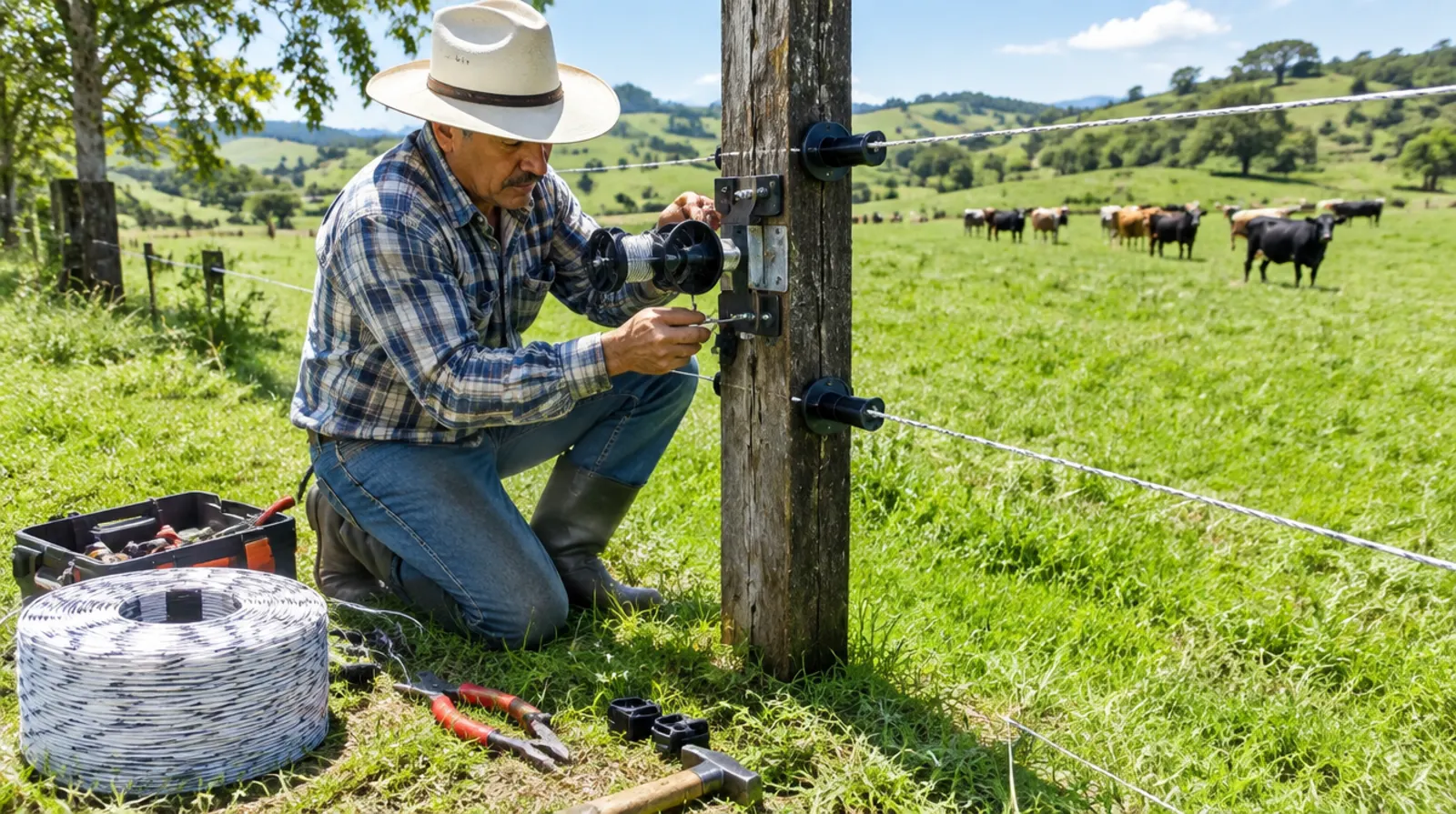
New to fencing? Start with our guide on how to install an electric cattle fence step by step and our installation manuals. For wire, insulators and mains energizers, see energizers and the full product catalog.
Get a quote for your solar fence
Use our fence calculator to estimate materials by acreage. If you need help sizing the panel and battery, contact us on WhatsApp at +57 305 453 5264 or email [email protected]. We've been based at the Medellín cattle fairgrounds since 2014 and ship across Colombia and internationally.
Frequently asked questions
What size solar panel does an electric fence need?
It depends on the energizer's draw. Work out daily consumption in Ah, multiply by 12 V, divide by your local peak sun hours and add a 30% margin; many small energizers run on 10 to 40 W panels.
How long does a solar fence battery last without sun?
A properly sized battery should carry the fence for 3 to 5 sunless days. Overall battery life depends on chemistry, depth of discharge and keeping it out of the heat.
Can I use a car battery for a solar electric fence?
It's not recommended. Car batteries are built for short bursts and degrade quickly under deep discharge; use deep-cycle, gel or lithium batteries instead.
Does a solar electric fence work at night?
Yes. The panel charges the battery during the day and the battery powers the energizer at night. Some energizers offer a night or economy mode to extend autonomy.
Need help with your fence?
We ship worldwide. Message us and an advisor will help you choose the right setup.